PM Modi seems to be gradually ending India's strategic ambiguity

'The separatist resurgence in Balochistan is thwarting Pakistan's plans to build CPEC projects to optimally utilise Balochistan's energy reserves,' points out Brigadier Gurmeet Kanwal (retd).

PET MRI, a new cancer screening test can detect the disease in the body with greater accuracy. It can also chart out the possible course of malignancy in the future

The most remarkable feature of these warships is that, tonne-for-tonne, they are not only one of the world's most heavily armed but also one of the cheapest.

'The obsession of the Pakistan army with India leads to several destabilising things. Support for the Taliban in Afghanistan. Support for groups like the Lashkar-e-Tayiba, that have attacked India. Every time you get an attack like that there is a possibility of a war. And then the build up of the their nuclear arsenals. Chances of a nuclear weapon landing in the hands of a terrorist group, or a nuclear war breaking out, are tiny. But they are higher here than anywhere else in the world.'
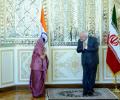
India's low passion, very cautious, relationship with Iran of the last 36 years awaits transformation, says Lieutenant General Syed Ata Hasnain (retd). Prime Minister Modi's visit cannot be a negotiating event; it is a symbolic one to strengthen the politico-diplomatic relationship.
'I have no doubt that the government means well.' 'I am merely curious to know whether my suspicions of it being enthusiastic about shooting first and aiming later are unfounded,' says Aakar Patel.
'The response to terror is not always reciprocal terror, nor is launching a conventional response the best response.' 'The best response is to make the sponsor pay a price he cannot afford,' says former RA&W chief Vikram Sood.

'Islamabad receives billions in aid from the US but continues to harbour terrorists,' he said.

Moving ahead with their new mantra -- Chalein Saath Saath: Forward Together We Go -- Prime Minister Narendra Modi and United States President Barack Obama on Tuesday vowed to deepen cooperation in every sector for the benefit of global stability and people's livelihoods over the next ten years.

'Peace talks with Pakistan are like accepting a dinner invitation from cannibals and hoping to return alive,' says Colonel Anil A Athale (retd).

How to deal with a country that has made export of terror a reason to make the world notice and fund it? Rediff.com contributor Sanjeev Nayyar offers a few suggestions

a look at the devastation caused by the twin blasts reportedly caused by combustible and explosive goods stored in containers at a warehouse in the northern Chinese port city of Tianjin

Pope Francis on Friday called upon the world community to put aside their "partisan interests and sincerely strive to serve the common good".

Theories of sabotage may be tempting to lap up but let's wait for the Board of Inquiry to submit its report on INS Sindhurakshak, say officers like Vice Admiral (retd) K N Sushil. Vicky Nanjappa reports

This is the joint statement issued by the ministry of external affairs on the visit of US President Barack Obama to India.
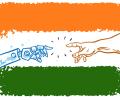
'It is in electronics that the gap between where we are and where we need to be is most obvious and most persistent.' 'It is not only a national security issue, but also a commercial issue,' argues Rajeev Srinivasan.

'Prime Minister Modi has initiated a host of reforms in the right direction, and I would like to see that continuing.'
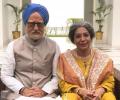
'People have a certain perception about my political leanings -- and rightly so.' 'But I am an actor first, and then an activist.' 'And I am not an accidental actor.' 'There was no way I was going to be dishonest with my acting,' Anupam Kher tells Veenu Sandhu.

The biological weapons convention is a non-starter in spite of the efforts of many states in the world for the last five decades mainly because the US is not ready to accept the 'verification protocol' which could allow the formation of some official mechanism for inspections, says Ajay Lele.

The growth story of India depends on its achievements in the S&T sector. There is a need to revolutionise the landscape of Indian science and technology and this is only possible if the scientific community is allowed to work 'professionally and scientifically' without burdening them with the baggage of the past, says Ajey Lele.

Nanotechnology has remarkable applications in a variety of spheres, including agriculture, animal husbandry and natural resources management.

'We have never had a policy regarding Pakistani artistes working in India.' 'We welcome them with open arms and that remains the official policy of the Indian government, including the current dispensation.'

The Ghazi Attack tells the story about one of the 'last unsolved greatest mysteries of the 1971 war.'

Could Mumbai have been saved from terror on November 26, 2008? Perhaps, had the intelligence agencies of India, United States and Britain worked together.

'Whether it's investments in Kashmir, building naval facilities, or selling top-of-the-range military equipment, Pakistan could well benefit more under Xi's watch.' 'Do Chinese concerns about the 'Islamisation' of Pakistan give it pause about how quickly to move forward with security and economic projects? At the moment the indication is quite the opposite: China is doubling down on its support to Pakistan, partly because of its fears about where the country is headed.'

'What Modisaab will accomplish by tampering with the treaty is providing ammunition to ultra-nationalist right wing elements within Pakistan who see India as an existential threat.'

'For its part, Pakistan often gives safe haven to agents of chaos, violence, and terror.'

'US counter-terrorism policy was encouraging and emboldening the Indians to deal with the problem of Pakistani-supported terrorism once and for all.' 'The US had been trying to browbeat Pakistan into doing what it wants, with very limited success.'
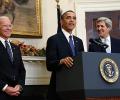
'The threat that India faces and the threat the United States faces is not just to the homeland, but to our people and to our institutions wherever they may be.' In an exclusive conversation with Aziz Haniffa/Rediff.com, US Assistant Secretary of State Nisha Desai Biswal outlines the importance of Prime Minister Modi's visit for America.
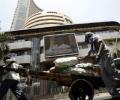
The 30-share Sensex ended lower by 61 points at 29,122 mark and the 50-share Nifty slipped by 12 points to close at 8,797.

'The real test will be in defence-related deals, for instance the Javelin anti-tank missile: Is the US willing to co-develop something with India, on terms that will support the 'Make in India' initiative? Is there defence technology transfer? Or will it dump old junk on India?' asks Rajeev Srinivasan.

Why is Xi Jinping visiting Saudi Arabia, Egypt and China this week? Former RA&W officer Jayadeva Ranade explains the significance of China's outreach to the Middle East.

Excerpts from Prime Minister Narendra Modi's speech at the Combined Commanders Conference on board the INS Vikramaditya at sea, off the coast of Kochi.

President Obama had no intention of risking a global conflagration on account of the use of chemical weapons in Syria, especially at a time when he was struggling to wind up the wars his predecessor had started, says T P Sreenivasan

New Delhi and Beijing are the only two regional capitals that have commented on US President Donald Trump's speech on August 21 outlining the way forward in Afghanistan. The Indian foreign ministry statement was effusive in praise, while the Chinese statement has been one of cautious and guarded hope. Delhi has identified itself with Trump's Afghan strategy, whereas the Chinese stance is calibrated -- observant and objective, keeping a distance, says Ambassador M K Bhadrakumar.

'By lifting his visit to vibrant new functional and emotional planes, Modi saved it from looking like a mere obligatory give-and-take. This is no mean achievement. With his penchant for execution, he must fast track action on the proposals agreed upon, so that the fine print matches the hype,' says B S Raghavan.

Was the Modi-Obama summit the panacea for all that troubles the India-US relationship?

'Those who have seen the functioning of the Modi government in Gujarat know that the issues related to Hindutva and issues of economy and growth function simultaneously.' 'Modi's politics are based on the understanding of the middle-class consumer society which is in pursuit of material aspirations.' Sheela Bhatt/Rediff.com reveals the Modi government's economic and political plans for the year ahead.